
What is Cardarine?
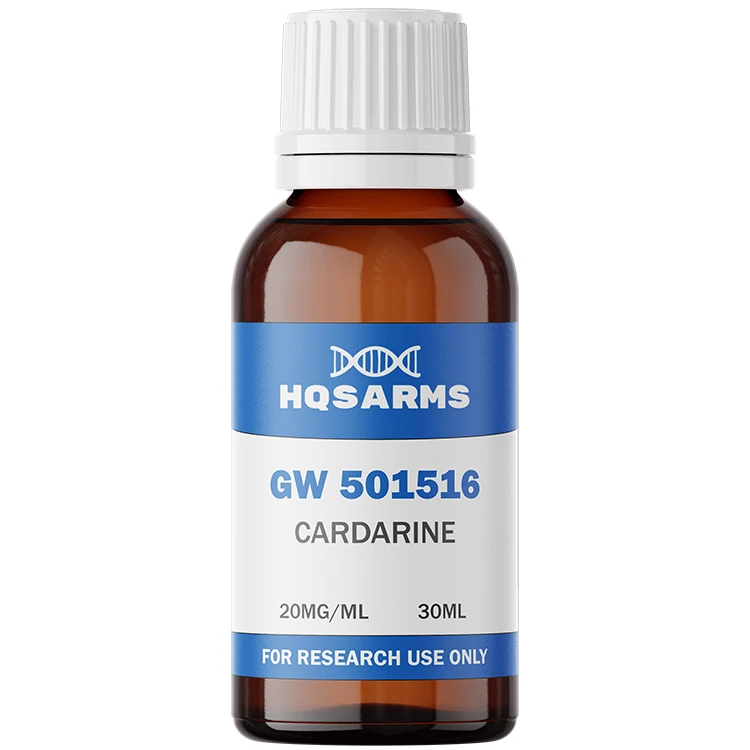
Cardarine, also known as GW501516, is a synthetic compound that acts as a metabolic modulator. Initially developed in the 1990s as a potential treatment for metabolic and cardiovascular diseases, it has since become a focus of scientific research on endurance, fat oxidation, and glucose metabolism.
While often mistaken for a SARM (selective androgen receptor modulator), it actually belongs to a class of drugs called PPAR (Peroxisome Proliferator-Activated Receptor) agonists, which can modulate energy metabolism.
The primary claimed benefits include weight loss, improvements in diabetes and obesity, better blood lipid levels, and enhanced sports performance; however, research on humans in these areas is limited.
Unlike anabolic steroids or SARMs, Cardarine does not bind to androgen receptors. Instead, it activates the PPAR-delta pathway, which plays a vital role in how the body burns fat for energy, making it a unique compound with distinct metabolic effects.
Cardarine results
Studies have shown many effects, including:
- Boosts fat burning
- Enhances endurance
- Reduces recovery time
- Increase in HDL (good) cholesterol
- Decreased blood triglycerides
Dosage and Cycle
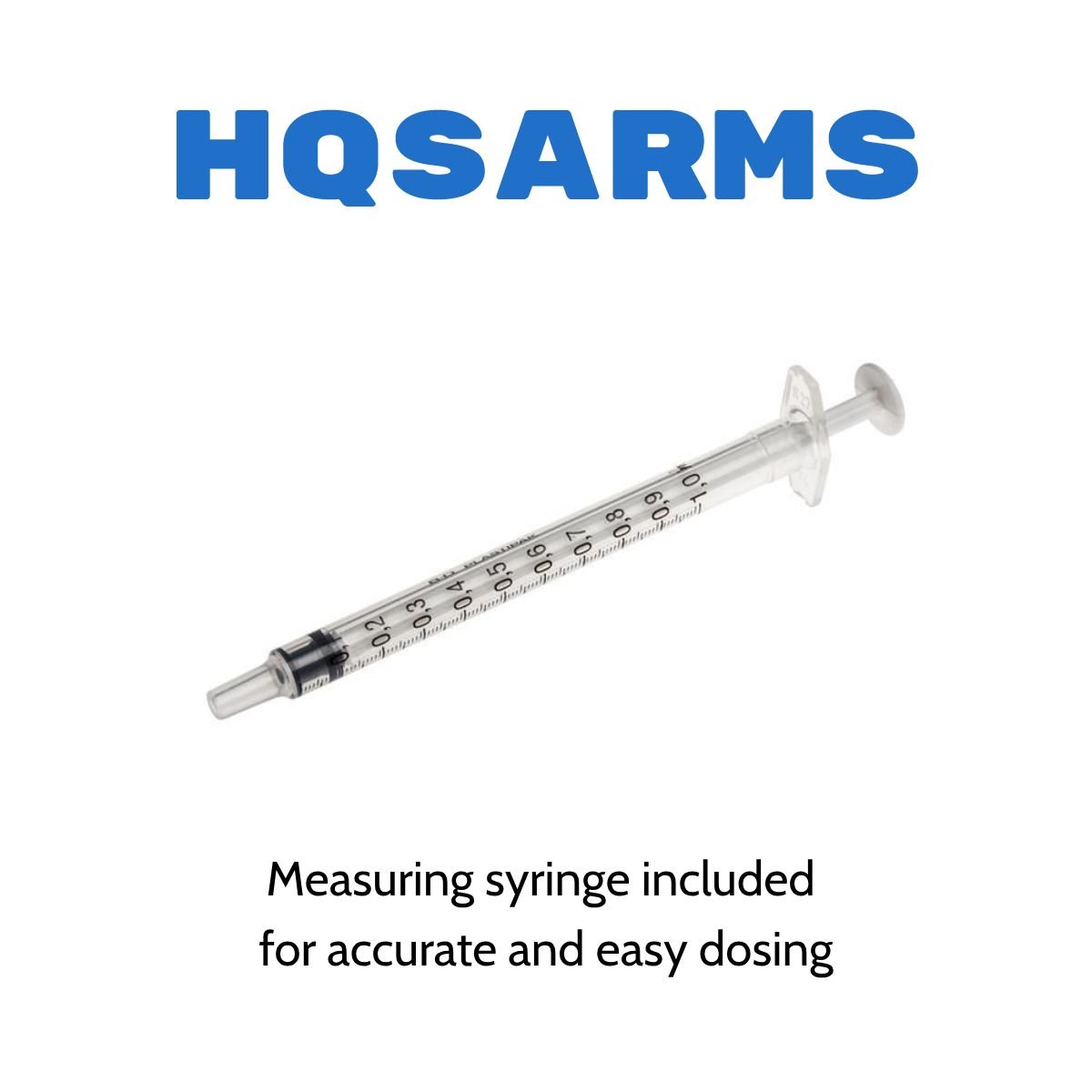
The common dosage for this compound is 20mg per day, which equals 1 ml of liquid Cardarine. Since this compound has a half-life of 16 to 24 hours, it can be taken in a single daily dose or split (morning/evening).
An average cycle of Cardarine is 6 to 12 weeks.
Side effects
A major concern with Cardarine is its potential side effects. In the early days of its discovery, research determined that Cardarine could cause cancer to rapidly develop in mice and rats if taken in doses of 1.4 mg per pound (3 mg per kilogram) of body weight per day.
At this point, large pharmaceutical companies that had previously funded the research discontinued further studies of the drug.
It is crucial to note that both the dosage and duration used in this study were relatively high compared to those used in later human studies. In fact, a series of recent high-impact cancer research studies from 2016 through 2019 show that GW-501516 has definitive anticancer properties[2][3][4].
Despite the limited scope of clinical research in humans, no side effects were reported.
Legal status
Cardarine has not been approved by the FDA or EMA for human consumption or therapeutic use. It can therefore not be legally prescribed or sold as a supplement.
Due to its potential role as a metabolic modulator and performance enhancer, Cardarine was added to the list of banned substances controlled by the World Anti-Doping Agency (WADA) in 2009.
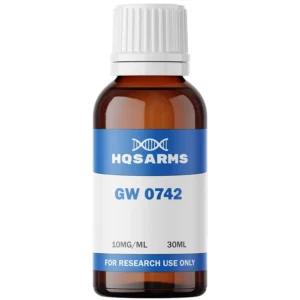
Cardarine (GW-501516) from HQSARMS is strictly intended for research purposes only.
Product specifications
| Application | PPARδ receptor agonist |
| Form | Liquid |
| Concentration | 20mg per ml |
| Composition | 98% PEG-400, 2% GW-501516 |
| Storage | Room temperature |
| Storage life | 2 years |
| CAS | 317318-70-0 |
| Molecular Weight | 453.498 g/mol |
| Chemical Formula | C21H18F3NO3S2 |
| Synonyms | GW501516, GW 501516, GW-501516, Cardarine, Endurobol, GSK-516, GW1516, GW 1516, UNII-7I2HA1NU22 |
References
[2] L. Gu, Y. Shi, W. Xu, and Y. Ji, “PPARβ/δ Agonist GW501516 Inhibits Tumorigenesis and Promotes Apoptosis of the Undifferentiated Nasopharyngeal Carcinoma C666-1 Cells by Regulating miR-206,” Oncol. Res., vol. 27, no. 8, pp. 923–933, Aug. 2019.
[3] S. D. Saibil et al., “Activation of peroxisome proliferator-activated receptors a and D synergizes with inflammatory signals to enhance adoptive cell therapy,” Cancer Res., vol. 79, no. 3, pp. 445–451, Feb. 2019.
[4] R. W. Smith, J. D. Coleman, J. T. Thompson, and J. P. Vanden Heuvel, “Therapeutic potential of GW501516 and the role of Peroxisome proliferator-activated receptor β/δ and B-cell lymphoma 6 in inflammatory signaling in human pancreatic cancer cells,” Biochem. Biophys. Reports, vol. 8, pp. 395–402, Dec. 2016.