
This article was last updated on July 31, 2026.
Imagine getting the benefits of exercise: better endurance, enhanced metabolism, and improved fat-burning, without ever picking up a dumbbell or lacing up your running shoes. SLU-PP-332 attracted significant media attention following a cluster of preclinical publications from Saint Louis University’s Burris laboratory in 2023. That attention, and the “exercise in a pill” framing that accompanied it, have substantially outpaced the scientific evidence.
Meet SLU-PP-332, a novel compound that is said to mimic the metabolic effects of exercise by activating energy-regulating receptors in the body. While still in the early stages of research, this molecule is quickly gaining attention in the fields of metabolism, aging, and performance enhancement.
In this article, we will unpack the truth about this novel compound and try to distinguish fact from fiction.
What is SLU-PP-332?
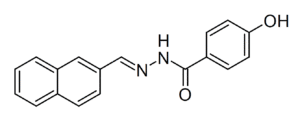
SLU-PP-332, sometimes referred to as SLOOP, is a synthetic small molecule developed by researchers at Saint Louis University (SLU). It functions as an Estrogen-Related Receptor (ERR) agonist.
ERR receptors play critical roles in mitochondrial biogenesis, oxidative metabolism, and overall energy expenditure.
By activating ERRα/γ, it directly influences genes involved in energy production, muscle function, and fat metabolism, which are all central features of an “exercise-like” response.
How Does SLU-PP-332 Work?
The Estrogen-Related Receptors (ERRs) are orphan nuclear receptors, meaning their natural ligands (if any exist) have not been definitively identified. Despite their name, they don’t bind estrogen. Instead, they regulate energy metabolism in tissues like the heart, skeletal muscle, and brown fat; all organs with high energy demands.
SLU-PP-332 works by binding to ERRα and ERRγ, boosting the transcription of genes involved in:
- Mitochondrial biogenesis
- Fatty acid oxidation
- Oxidative phosphorylation
- Glucose uptake and utilization
In other words, it tells your body to act like it’s in a state of regular aerobic training, even when you’re sitting still.
Research study findings
In a landmark 2023 study led by researchers at SLU, the effects of SLU-PP-332 were tested in sedentary mice over several weeks. Here’s what they found:
- 🏃♂️ Endurance Boost: Mice treated with SLU-PP-332 could run significantly longer on a treadmill compared to untreated controls, despite not undergoing any physical training.
- 🔋 Mitochondrial Gene Expression: The compound upregulated genes associated with energy metabolism in skeletal muscle, mimicking the transcriptional signature seen in exercised animals.
- 🔥 Fat Utilization: There was an increase in lipid metabolism, suggesting that the mice were burning more fat as fuel.
- 🧬 No Cardiac Hypertrophy: Unlike some other metabolic enhancers (like GW501516), SLU-PP-332 did not appear to cause adverse heart remodeling, a positive sign for safety.
These results have led some to describe SLU-PP-332 as a “molecular shortcut to fitness“, but that phrase comes with some caveats, which we’ll discuss below.
SLU-PP-332 vs. Other Exercise Mimetics
Several compounds that aim to mimic or enhance the effects of exercise through pharmacological means currently exist. How does SLU-PP-332 compare to these other exercise mimetics?
| Compound | Target | Main Effect |
|---|---|---|
| SLU-PP-332 | ERRα / ERRγ | Mitochondrial biogenesis, endurance |
| SR-9009 | REV-ERBα | Circadian rhythm, metabolism |
| GW-501516 | PPARδ | Fat burning, endurance |
| GW-0742 | PPARδ | Fat burning, endurance |
| AICAR | AMPK | Cellular energy sensor |
What makes SLU-PP-332 especially promising is its direct action on genes involved in energy metabolism, without the off-target effects or toxicity profiles that have haunted other mimetics.
Potential Benefits
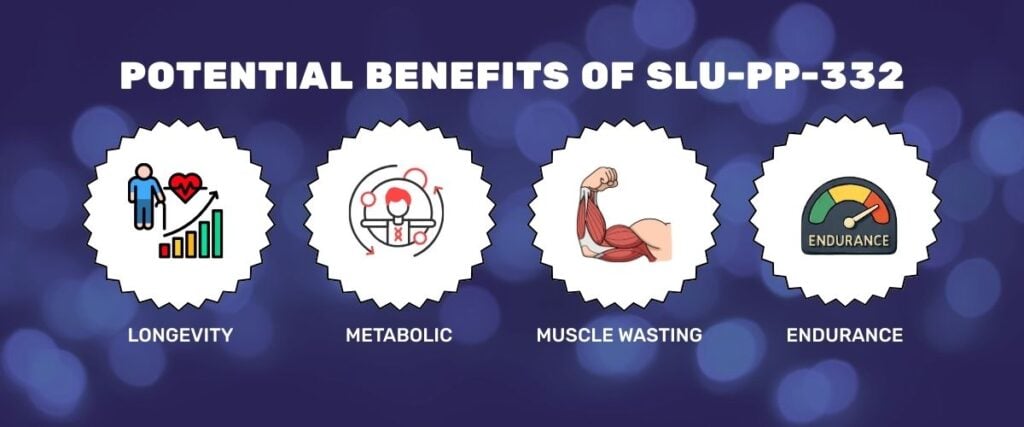
While human studies are needed to confirm real-world applications, the preclinical data suggest that SLU-PP-332 may eventually be useful for:
- Improving Endurance
Even in the absence of training, the compound increases mitochondrial function and aerobic capacity in muscle tissue. - Treating Metabolic Disorders
Disorders like obesity, type 2 diabetes, and fatty liver disease might benefit from enhanced mitochondrial activity and improved fat oxidation. - Combating Muscle Wasting
In conditions like aging, cancer cachexia, or long-term bed rest, SLU-PP-332 might help preserve muscle function and energy metabolism. - Longevity and Anti-Aging
While speculative, anything that improves mitochondrial function is of interest to the longevity community. Since mitochondrial decline is linked to aging, boosting their performance could be a powerful intervention.
Side Effects
Every compound – especially a novel one – comes with caveats. So what are the potential downsides of SLU-PP-332? Thus far, animal studies have not reported severe side effects or toxicities at effective doses of SLU-PP-332. Mice treated for weeks showed improvements in various health markers without obvious harm. While this is encouraging, it’s far from a guarantee of safety in humans.
The most significant limitation is simply the lack of long-term human data. It’s unclear how chronic activation of ERRα might affect various organs over long periods. For example, while ERRα activation boosts metabolism (a good thing for performance and fat loss), an overactive metabolic state could potentially stress certain tissues or disrupt hormonal balances in ways we don’t yet understand.
Because there are no human trials on SLU-PP-332, we must rely on anecdotal evidence and user reports for possible side effects. There are multiple posts on Reddit as well as other sources with user experiences, which mention a few of those:
- A (slight) increase in body temperature for about 30 minutes after dosing.
- Some level of exhaustion after the initial increase in energy.
- Increased sweating when working out.
None of these potential side effects are shocking and what one would expect based on the method of action associated with this particular compound.
Who’s Interested in SLU-PP-332?
Despite its early stage, SLU-PP-332 has piqued interest in several circles:
- Academic researchers studying metabolic disorders, exercise biology, and aging.
- Biohackers exploring new frontiers in performance and recovery (albeit prematurely).
- Pharmaceutical developers considering exercise mimetics as tools for treating chronic diseases.
- Athletes and coaches, though use in sport remains speculative and ethically fraught.
Dosage and administration
Research findings
Since SLU-PP-332 is currently a research compound, there is no standardized “dose” or usage protocol for humans. However, understanding how it’s been used in studies provides some insight. In animal experiments, relatively high doses were required to see the dramatic effects.
A typical regimen in mice was about 50 mg per kilogram of body weight, given twice daily over several weeks. For a 70 kg (154 lb) human, an equivalent scaled dose would be extremely large (several grams per day) – far beyond what anyone would practically take. It’s likely that if SLU-PP-332 ever progresses to human trials, the effective doses will be much smaller, given differences in metabolism and the compound’s high potency at its target (it activates ERRα at nanomolar concentrations)
In terms of administration, early studies often delivered SLU-PP-332 via injection. For example, research teams reported injecting the compound into mice (intraperitoneally) to ensure consistent absorption. The developers have noted a need to refine the compound into an oral pill form, since an easy-to-take pill would be preferable for human use.
Bioavailability
SLU-PP-332 appears to have a very decent oral bioavailability (~45%) in rodent models, meaning nearly half of an oral dose can reach the bloodstream – a sign that oral dosing could be viable. In the same study, it was determined that the compound’s half-life is approximately 8–10 hours in rodents, suggesting that future users may require a twice-daily dosing schedule to maintain steady levels.
Due to the absence of human trials, it is uncertain whether the bioavailability in humans is the same as in rodents. Factors such as the presence or absence of stomach contents may influence the effectiveness of this compound when taken orally. For this reason, some users prefer to take SLU-PP-332 sublingually.
Preclinical research findings
All currently available efficacy data for SLU-PP-332 come from mouse studies. None of the findings listed below have been replicated in humans. Individual results in humans, if any studies were ever conducted, may differ substantially, and all of the following findings describe observations in specific animal models under specific experimental conditions.
Endurance and skeletal muscle gene expression
The foundational characterization of SLU-PP-332’s in vivo effects appeared in the 2023 ACS Chemical Biology paper by Billon, Sitaula, Banerjee, and colleagues from the Burris laboratory. In this preclinical study, mice (n = 6 per group) received SLU-PP-332 at 50 mg/kg intraperitoneally, either as a single acute dose 1 hour before treadmill testing or as chronic twice-daily dosing over a 10 day period. The results were compared against vehicle (DMSO) controls.
Treated mice showed increased treadmill running distance and time relative to vehicle controls, alongside induction of an ERRα-dependent acute aerobic exercise gene program in skeletal muscle (including upregulation of Ddit4 and Slc25a25). This is consistent with observations after endurance exercise. The activated gene program included targets associated with fatty acid oxidation, components of the mitochondrial electron transport chain, and oxidative fiber specification.
Metabolic syndrome and body composition
A 2024 follow-up paper by Billon, Schoepke, Avdagic, and colleagues published in the Journal of Pharmacology and Experimental Therapeutics examined SLU-PP-332 across three mouse models: C57Bl6 mice on normal chow (n = 8 per group), diet-induced obese mice on high-fat diet (n = 7 per group), and leptin-deficient ob/ob mice (n = 8 per group), with treatment durations of 15 to 28 days depending on model.
In comparison to vehicle controls, DIO mice treated with SLU-PP-332 showed less fat mass accumulation and a reduction in adipocyte size. Over 15 days, ob/ob mice also showed a decrease in fat mass. Additionally, the treated animals exhibited increased energy expenditure, enhanced fatty acid oxidation, and improved insulin sensitivity in metabolic syndrome models, with key comparisons yielding p-values ranging from <0.05 to <0.0001, as noted in the published figures. However, no improvement in glucose metabolism was observed in mice fed a normal chow diet.
These findings support claims regarding the potential relevance of SLU-PP-332 to fat oxidation and weight-related outcomes.
Cardiac function in heart failure models
A 2024 paper by Xu, Billon, Li, and colleagues published in Circulation examined pan-ERR agonists (including SLU-PP-332 and its successor compound SLU-PP-915) in the mouse transverse aortic constriction model of pressure-overload heart failure. In 8-week-old mice following 27-gauge TAC surgery, the administration of SLU-PP-332 at a dosage of 25 mg/kg intraperitoneally twice daily for a treatment period of up to 6 weeks (with sample sizes ranging from 4 to 23 per measurement) resulted in significant improvements in ejection fraction and a reduction in cardiac fibrosis (p < 0.05 compared to sham-vehicle). Additionally, the treatment increased survival rates and enhanced cardiac fatty acid metabolism and mitochondrial oxidative capacity when compared to vehicle-treated TAC controls. However, it did not affect cardiac hypertrophy.
This study extends the preclinical rationale for ERR agonism beyond skeletal muscle into the field of cardiac biology. It also highlights the necessity for a cardiac safety evaluation of this compound as a priority in any future clinical development, a step that has not yet been initiated for SLU-PP-332.
Anecdotal evidence and user reports
As we mentioned earlier, no human trials have been conducted on SLU-PP-332 yet. This hasn’t stopped users in the fitness, bodybuilding, and biohacking communities from researching this remarkable compound for performance-enhancing purposes.
Numerous user reports about SLU-PP-332 are available on Reddit, YouTube, and various other platforms. These anecdotal reports provide insights into dosages employed in self-experimentation practices.
Reported dosage practices
Users report a wide range of dosages, often measured in micrograms (mcg):
- Low Doses (250–500 mcg/day): Some individuals start with 250 mcg in the morning and an additional 250 mcg before afternoon workouts. This regimen is noted for enhancing endurance and energy levels without significant side effects.
- Moderate Doses (500–1,000 mcg/day): Others increase to 500 mcg twice daily, observing consistent fat loss and elevated body temperature. However, some report sleep disturbances at these levels.
- High Doses (1,000–2,000 mcg/day): A subset of users experiment with doses up to 2,000 mcg daily, often split between morning and evening. These individuals often report pronounced effects on fat metabolism and energy but also caution about potential overstimulation.
Reported benefits
Anecdotal experiences suggest several potential benefits:
- Increased Energy: Elevated energy levels and reduced perceived exertion during workouts are commonly mentioned.
- Enhanced Endurance: Users note improved stamina during cardiovascular and resistance training sessions.
- Fat Loss: Some report accelerated fat reduction, particularly when combined with calorie-controlled diets.
Reported side effects
Based on the same user reports, there are a couple of side effects reported:
- Increased sweating
- Insomnia (especially at higher dosages)
Legal status of SLU-PP-332
Currently, in August 2026, SLU-PP-332 is still in the very early stages of research. As such, it has no FDA or EMA approval, no IND application, and no registered clinical trials in humans. It is not available by prescription, through compounding pharmacies, or through any legitimate therapeutic channel. It is classified as a research tool compound, available only to licensed research institutions for use in preclinical studies.
Lacking approval by regulatory agencies such as the FDA and EMA, it can not legally be sold as a supplement, nor can it be prescribed through traditional medical channels.
At the time of writing, SLU-PP-332 is not yet listed as a prohibited substance by WADA or any related institute. Because it targets fat metabolism, it could eventually fall under WADA’s prohibited substance list when its performance-enhancing effects are officially confirmed.
Where can I buy SLU-PP-332 online?
Finding a reliable source is crucial if you want to buy SLU-PP-332 in Europe. By choosing a vendor with a proven track record of quality, delivery, and support, you can avoid unnecessary risks. HQSARMS has been a trusted supplier of liquid SARMs and related research chemicals since 2019, serving many thousands of customers throughout Europe.
Buying SLU-PP-332 from HQSARMS comes with several benefits:
- Quality assurance: Our products have a purity of at least 98% and a dosing variation between batches of less than 5%.
- Guaranteed delivery: As long as you provide a valid shipping address, we will guarantee that your package gets delivered or you provide a full refund.
- High-dose: HQSARMS SLU-PP-332 liquid is dosed at 1000 mcg (or 1 mg) per ml, while most vendors sell it at 250 mcg/ml.
Frequently asked questions
What is the oral bioavailability of SLU-PP-332?
Research in rodent models have shown that the bioavailability of SLU-PP-332 is about 45%.
Does SLU-PP-332 have an influence on estrogen levels?
No. The fact that this compound is an agonist of Estrogen-Related Receptors (ERRα / ERRγ) does not mean that it has any influence on estrogen levels.
Is SLU-PP-332 legal?
Like most other research chemicals, it has not been approved for human consumption by the FDA or any other regulatory agency. This basically means that it is only legal when sold for research purposes.
Is SLU-PP-332 a peptide?
No, SLU-PP-332 is actually not a peptide, but a small-molecule ERR (Estrogen-related receptor) agonist. Peptides are chains of amino acids linked by peptide bonds, and SLU does not have that structure.
What SLU-PP-332 dosage per day is standard?
Based on anecdotal evidence and user reports, the most commonly used dosage of SLU-PP-332 is between 250 mcg and 1000 mcg per day. An actual standard daily dose does not exist for this compound, as it has not yet progressed to human trials.
References
- Billon, C., et al. (2023). “A Synthetic ERR Agonist Alleviates Metabolic Syndrome.” Journal of Pharmacology and Experimental Therapeutics.
- Billon, C., et al. (2022). “Synthetic ERRα/β/γ Agonist Induces an ERRα-Dependent Acute Aerobic Exercise Program.” ACS Chemical Biology.
- Nasri, H. (2024). “New hopes on ‘SLU-PP-332’ as an effective agent for weight loss with indirect kidney protection efficacy; a nephrology point of view.” Journal of Renal Endocrinology.
- Elgendy, B., et al. (2024). “An exercise pill may soon offer the same benefits as a workout.” Fortune Well.